Saturday, February 22, 2014

Rural Cambodia, the last frontier

Despite Phnom Penh's fast growth pace  and Siem Reap's huge success as a tourist magnet because of its iconic Angkor Wat, Cambodia is still a very rural country. Arguably, better roads and new Chinese-built bridges will lead to faster urbanisation. 

For the tourist wanting to walk off the beaten path, opportunities abound. But the journey can be back-breaking.

First, The Ugly Chinese Abroad

Last Valentine's Day, I was queuing to buy my bus ticket to Stung Treng and a man at the head of the next line was speaking loudly in Chinese and hitting his knuckles against the glass counter. He kept saying the word stupid to the girl manning the counter. I said to the man:

Why are you scolding her?
I'm not scolding her. I'm merely saying she's stupid. She doesn't understand I want a window seat.
Look, she can't understand Chinese and you can't speak Khmer. How can she understand you?
That's why she is stupid.
I'm sorry, but I have to give you this advice: why don't you ask someone who speaks Chinese and Khmer to help you. If you continue to raise your voice at her, I will wish I don't have anything to do with being Chinese.
Are you Chinese?
No, I'm Malaysian.

This story has a good ending. In front of me, a local had looked on and until then hadn't uttered a word. He could speak English, and when three men used a combination of three languages, the angry man calmed down, realizing the girl had already given him a window seat.

The CNN had once portrayed that an ugly tourist makes places "bend" to his will. More than simply just being rich, it's making the place one visits accommodate one's tastes, or disrespecting local customs. 

Has the mantel or stereotype the Americans held been finally replaced by the Chinese?

Stung Treng, My Destination

Phnom Penh to Stung Treng, 348 km by road. Shorter by river!
I was going to Stung Treng, a provincial capital town, only 70 km from the Laos border.

I think Stung Treng is as rural as one can get when traveling in Cambodia. Things to do here are biking along the banks of the Mekong and taking a boat to the Laos border to see the Irrawaddy dolphin and admire waterfalls on the Laos side of the border.

But, It's the Journey


At an average speed of 50 km/hr, it's easy to imagine that my destination would take a long time to reach, or 13 hours to be exact. There were several refreshment stops, and near the major towns, passengers were allowed to board or disembark. Every two hours or so, guys were able to signal the driver to stop so we could pee on the wheels if we wanted to (I saw someone doing it). 


Snuon Stol was a stop over point for a meal. On my return journey, I bought chempedak and coconut, but the drink lady was on both trips nice enough to let me fill my thermos. This town is near Mondolkiri, a remote region with a national park.


Kratie was reached in 9 hours. This is the most popular tourist stop and playground of sorts. An American girl takes tourists on kayaking trips to spot Irrawaddy dolphins. An NGO had started an adventure trail linking the town to Stung Treng, 140km away, on which one can ride a push bike or a boat, or walk. I was curious to find out if there existed a best kept hiking track in Asia. From the fact that the organisation that ran the promotion no longer maintained its website, I wasn't hopeful.


Soon after passing Kratie, I was photographing sunset through my window. The road was bad in sections and the bus slowed often to 30km or a crawl. By then, the air conditioner wasn't effective, and the dust that speeding vehicles kicked up was disturbing us so that the rear windows had to be opened.

Friendly People


Without a doubt, rural Cambodians are among the most friendly people in the world. They smile a lot. They also consume a lot of sugar, so I worry for them. A woman sat next to me, carrying a 24 month old infant. She was born premature. I was take aback when she showed me an energy drink and asked if it was alright to feed her child with it. I said in Chinese that she should not. This Cambodian woman earned about $500 per month in a shoe factory in Phnom Penh and her Taiwanese manager liked showering her with candies.

 To reduce the boredom, I struck up a conversation with a girl seated in front of me. At one of the stops, she ran after a monk to give him the equivalent of 25 cents. I asked her why she did it. Her reply was that she used to do this a few times a year. She even stood barefooted in front of the monk.

A Rare Find


A French Tourism NGO had set up Le Tonle, a training centre to teach young people how to run a hotel and tourist programme. When the mototaxi dropped me at its doorsteps at 9pm after a wrong turn, I was welcomed by Pech, the assistant local coordinator. At 24 and studying management at the local university, Pech seemed eager to show me the town.


Judging by the good manners and smiles, I was convinced the classes attended by the dozen or so Le Tonle trainees were having positive results. I was shown to the Ratanakiri Room, one of four with either single or double beds, sleeping 10 guests in all. A mosquito net hung over each bed. My room and the shared bathroom were spotlessly clean. I only had steamed rice and vegetable soup that night. It was a delicious meal. I slept very well.


Stung Treng had potential as a rural tourist town: it had village appeal.

Pech spoke good English. He was my guide the next day. Late into the previous  night, we discussed our plans. I took his advice to explore villages, and visit a silk factory and the sticky rice trail.


At sunrise, I was riding pillion along the river to Srey Krosant Village. We passed Preah Bat and Koh Sampea where villagers had already begun life that day, women were cooking and men (I also spotted one group of women) were warming themselves in the mid 20's temperature, beside smoky fires. In a vegetable garden, a woman was doing the day's watering using large metal cans hung on each end of a pole. I liked the Cambodian village scene.

The Sticky Rice Trail


My pushbike ride along the Mekong started with a seven-km easy jaunt to Mekong Blue, a cooperative by the Sekong River, started 10 years ago. It harnessed disadvantaged women to produce beautiful silk textiles for tourists who come a-calling or to be sent by road to a Phnom Penh outlet at an international hotel.

Silkworms are reared and silk cocoons harvested, processed, dyed and turned into beautiful silks. I was looking for a necktie that would make a difference: wearing a genuine  made-in-Cambodia accessory, and I picked one with an Ikat design.  I also bought a scarf for Sim. I was told it took three weeks to make. 

Recently, it opened a centre to also  house divorced women with small children.


After crossing Sekong Bridge, we arrived at Kankoban. We were lucky to find a family making sticky rice (krolan). This must be the most laborious food preparation I ever saw. First, rice soaked overnight with a pea was stuffed in foot long bamboo and coconut milk added. A bit of coconut meat was used to simply stop dirt from entering. This was cooked a few hours over a fire. The burnt bamboo tube was then shaved and thinned so one could peel it off to eat fragrant cooked rice. Each was sold for between 60 cents and a dollar. It was delicious.

The next stop on our cycling route was the Pum Thmay Village where the Mekong Bird Resort was situated. Boats here took tourists to an island where I was told there were hiking opportunities.


The Cassava Brigade


In my travel in rural Cambodia, I wanted to photograph children at play. But this morning, an idyllic vision was shattered. Here's how:


In Phnom Krahong, I saw a small group of mainly women, and children, bent, hard at work, using machetes to repeatedly chop something. Then I realized they were cutting cassava into small pieces. I snapped a few photographs of people at work, although it wasn't quite 8am. They looked happy when looking into my camera. As I rode on, I realized this was a cottage industry. Whole families, including small children of course, were in their yards, chopping up cassava and then spreading them up to dry by the sides of the road. I saw a few trucks on their way to collect the dried tuber, stuffed in large blue sacks. I saw several godowns, and in one, a towkeh was directing his workers stacking the sacks, presumably to be ready for sending to a factory to be processed into food additives, glue, or whatever use industry has thought of using the starch.


It was with mixed feelings when I reflected on the plight of these children. Most probably they weren't going to school. (Today, Saturday, is a school day here.) Yet, rural families need the income of 20 cents per Kg of dried cassava to live. 


I don't doubt it's a good industry, but children need to be in school.


Houses with a view

It seems ironic that tourism in Cambodia is less developed than in Laos. When our bus
stopped every two hours to let us go for a pee, I wonder if over the border, women needed to feel the same loss of privacy as those in my rickety bus did today. But I digress. I want really to write about the tourism potential i saw on the banks of the Mekong.

Yesterday, my guide pointed out a delapidated Khmer house he wanted to convert into a lodge and a piece of prime camping ground that could very well be what the banks of the Swan in Peppermint Grove in Western Australia looked like before the first mansions were built 100 years ago.


The houses we pedaled past were wooden instead of brick. Some were mere shacks. (Think of the beach shacks.) The only English the kids knew was the hello word that they greeted me if they were not up the tree already concentrating on picking the milk fruit, or if they weren't planing wood on what I thought was a dangerous machine. But the water views...


From what I read about the 4000 islands on the same
Mekong just a few km across the border, the region is an extremely popular tourist playground. 

Now if these Khmer houses with a view are made into lodges, and if Pech, my guide, realizes his dream, I envision the Mekong Row, not of millionaires perhaps, but of chalets for hikers served by the first exclusive walking path. The authorities it seems had seen some tourism potential but their idea seemed to be to replace the laterite road with an all-weather one, and who knows, may give in to greed and take over the houses with a view to build hotels.

Saturday, December 14, 2013

Walking the Milford Track, the 'world's finest walk'

Starting the walk at Glade Wharf
Due to its popularity, a hike on the Milford Track must be booked a few months in advance. A cancellation however allowed me to secure a place with only three weeks to go. Virgin Australia was also offering cheap fares flying from Brisbane to Queenstown. And so, on 18 November 2013, and after two years of wanting to walk this 'finest walk in the world', I disembarked from the first boat to arrive at the track head and begin the 53.5km walk. I was starting this walk with about 20 other enthusiastic hikers from all over the world.

Quintin MacKinnon was the first European to walk the Milford Track in 1869. He was looking for a route from Lake Te Anau to Milford Sound, which was already a popular tourist destination. He possibly used a row boat to cross the lake, and practically took the same route as we do today. In the 45 minutes ride to Glade Wharf, the track head, Jim the skipper and Angus the guide explained to me the interesting landmarks such as the caves in Lee Island, used by Maoris as a shelter. We also crossed a rocky outcrop on which was erected a cross, a memorial to MacKinnon.

We were always not far from the Clinton River
Day One: Glade Wharf to Clinton Hut (5km)
The weather on the first day was promising: clear sky with not a speck of cloud, and temperatures in the mid 20 degrees. Today's walk was over a short five km distance, but almost immediately, we crossed the Clinton River, in which a swim was irresistible. I got to a slow walking pace with Joab who had travelled from Israel, and we jumped into the water under the bridge, only to find it icy cold. But we were certainly refreshed.

By 3pm, I had arrived at the hut. I ate fried rice I had bought at the Chinese takeaway in Te Anau. The second group of walkers trudged in. Ross was the hut warden and he happily took us on a nature walk where he displayed his amazing knowledge of the local flora and fauna.

The Department of Conservation huts for independent walkers contain 40 bunk beds and cooking stoves and gas as well as water pumped from the rivers or nearby lakes. There are flushing toilets and in some huts washrooms to be used if you dare brave the icy water. The washbasins even have mirrors above them! Hikers need carry only a sleeping bag as well as equipment to cook in. Due to abundance of water close to the tracks, a liter of drinking water is all you need to carry in your pack.

The first day was hugely satisfying. We had begun to see ice-covered mountains, but in the coming days, we would enjoy even grander views.

Day Two: Clinton Hut to Mintaro Hut (16.5km)

It was again a sunny day, temperatures up to 25 degrees. It was actually hot. With food for the next four days (I was going on to walk the Routeburn Track), my pack weighed nearly 10 Kg and I could feel its weight.

Today's highlight was crossing the Prairie, an open valley between magnificent ranges with tall waterfalls. I swam in a pool under one of these falls. Signs in some sections warned walkers not to stop for fear of avalanches.

The hut was located next to the Mintaro Lake, fed by waters from melting ice. The beach was a perfect setting for a picnic, but one needed to have tough skin to ignore the sand flies which abound in the Fiordland.

Today, we saw the DOC's helicopters put to work. It was used to ferry and instal a new bridge on the track. Marianne, the hut warden, arrived that afternoon by helicopter. What a life!

We were now getting to know our fellow hikers. Our company was rather cosmopolitan: American, Israeli, Australian, Taiwanese, French and British in order of numbers. We were a friendly lot.

Day 3: Mintaro Hut to Dumpling Hut

Today was the highlight of the four-day walk. We crossed the MacKinnon Pass. It was a tiring 2 1/2 hour ascent to see amazing mountain scenery and postcard views. Joab and I were at the rear as both his knees were injured. But the slow pace allowed me to enjoy the amazing views.

At the McKinnon memorial, we made a chocolate drink and chatted with the guided walkers. They were a friendly lot. The McKinnon Shelter provided a respite from the cold winds. We cooked lunch here. There were views of snow covered mountains on all the windows. This must be the kitchen with the best views.

Just before reaching our destination, a few of us took a short detour to see the highest falls in New Zealand, at 580m.

I was the last hiker to walk into the hut. It was nearly 9pm.

Day 4: Dumpling Hut to Sandfly Point

The final day was a short walk to where we were picked up by a boat to Milford Sound.

The Milford Track is one of the greatest walking experience. (I've done long distance walks through temperate and tropical forests in Australia and Borneo.) The views of majestic mountains, the tall waterfalls and cascades (highest waterfall in New Zealand at 580m), and the peaceful and pretty rivers, the comaradie of strangers who became friends, and comfort of the well maintained huts and shelters, were reasons to rate this experience hightly. I couldn't say if this was the finest walk in the world, but it must be close.

If you're doing it - and you just must - try to walk a slow pace. Even though I'm a fast walker, I slowed down to enjoy what all my senses were absorbing - the sights and sounds mostly. I even plunged into icy cold water (but for just one second each time) and cleaned myself in cold water in washrooms in the huts.

This was a great time to be taking pictures so as to remember the adventure. But some moments could only be captured in memories. I had lots of fond memories.

Monday, July 22, 2013

A tale of three cities: impressions from our July 2013 travel


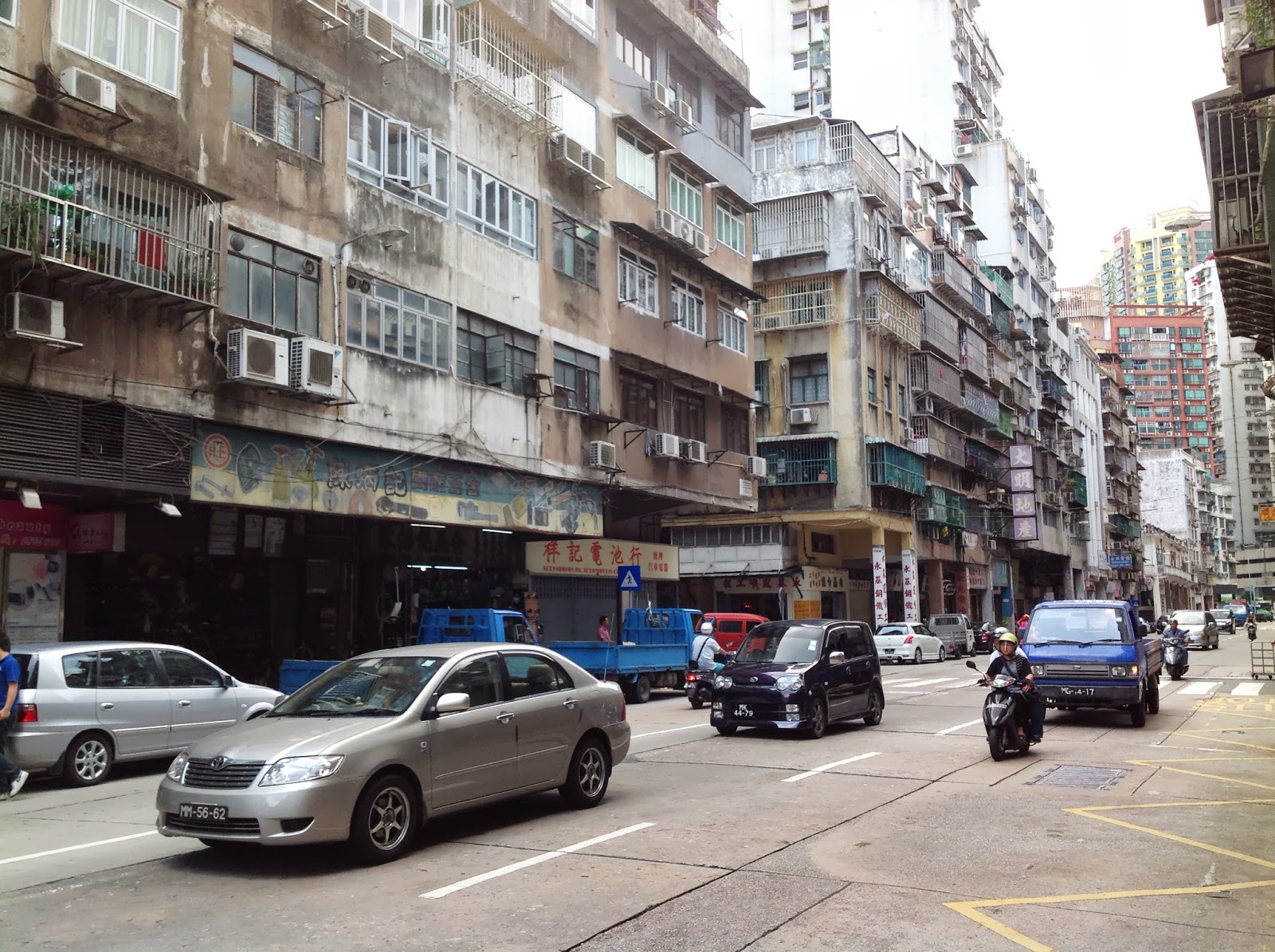
Comparing Macau with HK, I can't help but marvel at the different quality of tourism infrastructure despite it being the gambling mecca of the world. The ferry terminal in Macau is old and may appear even chaot...ic, compared to the modern and comfortable facilities in HK International Airport. To reach Macau, we took the ferry straight from the airport. (It's not well known that you can ride a ferry to Macau from the HK International Airport without exiting HK immigration. Your luggage is even checked through to Macau.) 

But Macau's 'software' is superior. As an example, the signs at the queuing lanes make it very clear that senior citizens (and locals) are given priority. Officials are polite. A few cab drivers seem grumpy, but most others are helpful and chatty like those in any capital cities.

As for Hong Kong ...

The sun seems to continue to rise on HK.

Still, you wonder if somewhere, the sun is not setting. To understand what's happening, let's take hospitality. Traveling now with the elderly reveals a rare, and necessary, insight into what will happen when you want this city state to slow down. You can get shouted at when you don't know the rules at the border. Space at Immigration doesn't allow more than one traveller to pass through formalities, so you can't help the infirm through. Traveling escalators are usually too fast (except at the Koshan Theatre, which puts up Cantonese opera performances attracting mostly elderly patrons) and hurrying commuters mutter impatiently under their breath when you block their path. 

Have you wondered if Hongkongers are getting poorer? They groan about the rich Chinese that flood this small city, snapping up expensive branded goods, and causing rents and property prices to skyrocket. Miu, my HK friend, cannot work because he's got a brain tumour, and his wife works part time so she can care for him. They rent a small apartment in Kowloon, and keep the windows shut because an air conditional in another block blows foul air trying at their unit. And they join a long queue (more than 200,000) to be eligible to buy a government-subsidised apartment. I hope they are successful. Talking about we being in a lucky country!

And, Kuala Lumpur?

We continue to moan about corruption and cronyism. I was reminded about how Malaysians get rich. 

Malaysians are used to monopolies. Traditional wisdom used to be that essential services, such as supplying electricity and water, and health care, had to be provided by government. Since Maggie (the late Margaret Thatcher, former Prime Minister of GB) it's no longer happening. These services are now useful tools to enrich segments of society or even individuals. All in the name of privatisation and competition to reduce prices, or to introduce efficiency.

We got used to seeing empty taxis leaving KLIA (the airport) because only KLIA limos belonging to some crony companies were allowed to ferry arriving passengers. So, city taxis that come to the airport had to return empty. Later, these taxis were given this right too, so we're at last
getting it right when it comes to saving the earth.

To leave Kuala Lumpur, we engaged the services of Mr Azman, who uses the Internet and a mobile phone to run his taxi business. We needed an MPV (5 large luggage pieces and a few shopping bags), but the taxi and limo companies wanted to charge twice the fare of a normal taxi. So, Azman's price of RM120 (A$40) for the 40 minute journey, all in, was reasonable. Think about it: why should one pay double for one vehicle with one driver? I think only Azman has got the numbers right.

Sunday, September 16, 2012

The Bibbulmun Track: Overcoming a mental challenge

At last, I take the plunge and decide to walk solo on the Bibbulmun Track this month. It's a small step - I will walk nearly 100 km from Collie to Balingup - but this is where the saying about taking the first step being the most important of tasks, if you want to accomplish something, rings so true.
What stopped me from doing this before?
The ultimate challenge is to walk all the way to Albany of course. On average, you need six weeks to finish the walk through bush land, magnificent forests, and fine beaches. You carry in a rucksack everything you need on this journey. Because you could only hope to carry a week's supply of food, a lot of logistics is required. You will want food drops and to stop in towns on the way to clean up from the muck collected in the bush.
There's also the looks of horror on Sim's face when I announced I was planning the long walk all by myself. That can't be safe? So I pick a good time to go. This is the peak period, usually after the winter rains stop dropping, and the high 30's heat hasn't returned to stop any form of hiking. I reassured Sim that you're never alone on the Bib as the track is fondly called. After al, it'll be just three days. I should be all right.
Other than three days food supply, I think I have everything I need for the walk. I'll have lots of time to myself. I'll read a lot (I take along my Kindle) and I'll sleep a lot.
I can't wait.

Progress reports can be read at http://bobthebornean.blogspot.com.au/.

Tuesday, October 20, 2009

Trekking in Sabah's Interior: Not a Walk in the Park

Picture by: Edmund Chung
Even after my last trip to Maliau Basin, popularly called Sabah's Lost World, I still ask why I did it. I have done it three times, and it was not like I was seeing things for the first time.

It's tough going also. I even think it's tougher than climbing Mount Kinabalu. You ascend a ridge, walk some distance along it, and then hike down, simply put. Yes, it's scaling the rim of a basin, except that the rim is tall.

 It rains many days in a year, so there's a 50% chance you walk in mud. You slip, and slip and slip ...

Did I mention Sabah is in the tropics? Things you touch and walk on in the tropics are damp and often falling apart because of decay or termite attack. (That sometimes can be a safety risk.) Some people find the humidity of the tropics debilitating. It saps your energy. I think it's the heat that saps your energy. In the forest, you sweat. Oh yes, you sweat a lot, but it can be cooling because of that. Just make sure you replenish your salts, though, or you risk being attacked by muscle cramps.

And there are the little creatures. I'm not bothered by leeches. I used to wear sandles (those with straps) so I could see the crawly creatures when they grope their way up my feet to the soft spots of my anatomy to drill their 'dracula fangs' (*) into. (These days, I wear boots? When you carry more than 15kg on your back, boots are supposed to support your ankles so you minimise sprain.) Along 'Jalan Babi' inside an amazing heath forest, you will get attacked by ticks. That can be a nuisance, or worse, pose a health risk.

Despite the hardships of visiting this unique forest, I see myself doing it as a pilgrimage. First, the rainforests need to be used.  If you don't cut down trees to make furniture, you had better turn them into tourists spots. If Richard Branson flies to Camel Trophy only, and marvel at the the magic that is Maliau Basin, let it be. I encourage even that sort of tourism. However, the reality is that tourism revenue (in Malaysia at least) is pittance compared to the timber riches well politically-connected people seem to attract. (Want to be a timber tycoon, anyone?)

I keep coming back because I also love the company of my friends who walk with me. Doing things with people who share your interests can be very enjoyable. We tend to build a bond when we have to help one another, as we always do when we visit a forest like Maliau Basin.

Now you know why I want to return to Sabah's Lost World.

*Note: Make sure you read the journal entries in Camel Trophy Camp. I didn't know whether to laugh or cry when I read this description made by a Camel Trophy volunteer.

(I wish  to acknowledge with gratitude Jimmy. He introduced me to this wonderful place and his organization and company made trips here so successful and joyful.)

Wednesday, September 9, 2009

The last time you sent a post card ...

Despite it being a busy day, I was determined that I would send postcards to my youngest nieces and nephew. How often do you find the numerals in the date aligned as today's did? Ten years ago, I sent a postcard to myself. I felt then that 9-9-99 was special.
I wrote to Daphne: "God must created numbers for a special purpose. Perhaps, it's so that we take stock of dates and time. Love life, obey your parents." I don't know why I sounded so paternalistic. I won't be a popular uncle if I continue to remind children to obey their parents.

Friday, August 28, 2009

What's happening to the office as we know it?

Information technology impacts most on service companies. New challenges being in the changing marketplace are brought about by changing client needs and advances in networking and multimedia applications such as the Internet. The exciting transformations in the modern office as it approaches the new Millennium, both in terms of seizing opportunities in the form of e-commerce and the processes and culture, are discussed. Particular reference is made to the power service industry due to the author's experience in the power utility, consulting, and international project development.

Contents

Introduction |Company Culture | The New Marketplace | A Tour of the Modern Office | E - Commerce in a Consulting Company | Conclusion - Which? and How? | References

Introduction

At the threshold of the new millennium, we face tremendous advances in information technology. Our working lifestyle is increasingly being dominated by personal computers, notebooks, sub-notebooks, scanners and high resolution colour printers, and digital cameras. Some of us are not so fortunate to have reached the pinnacle of success and be past the stage of counting on computers, and yet cannot figure out how to operate them. We are appropriately termed as computer infants, notwithstanding our physical age. However, the modern office is now more and more being run by young professionals whose lives revolve around electronic mail and Internet. It is inevitable that changes will be made to the modern office; hence, the subject of this Paper.

The software "Microsoft Office" is undoubtedly the most well known, if not the most popular computing package available for word-processing, spreadsheet, and database. Like the software version, the modern office must continuously be upgraded if it was to remain competitive. What are the areas that need reviewing?

Back to Contents

Company Culture

Before we look at the changes taking place in the office of a service company, let us consider the organic side of an organisation. The study of organisations, or commonly known as organisational behaviour, deals with the interactions between individuals making up the groups in the organisation. These interactions comprise power and influence [1], motivation, control, decision-making, rewards and punishment, and others. It is important because it affects the productivity and effectiveness of a company, and hence its ultimate survival. The environmental factors influencing organisational behaviour are the political climate in which the company operates, the state of the economy, social behaviour, and the technology that can be utilised.

The writer, Roger Lewin, [2] attributes the failure and success of several well-known companies, such as Apple Computer, Microsoft, Digital Equipment Corporation and IBM, to a similar concept. He likens business systems to ecosystems where companies must think of themselves not as machines but as organisms living in communities. In this way, they can rationalise that their fate will not be in the control of their CEOs as much as is commonly believed.

The behaviour of an organisation is manifest as the company culture. Research shows that very often, top management see themselves as outside of the culture. [3] Many managers talk of culture as indulgent, encouraging introspection and having little, if indeed anything, to do with the real objectives of the business. In fact, cultures are like personalities, and the successful ones are those who know enough of their strengths and weaknesses to build on the former and compensate for the latter. Strong cultures are like strong personalities and are better able to allow change in an organisation. Most of the time, the predominant culture and value systems are set by the owners or the chief executive of the company, and influence the company's mission. Therefore, the direction and goals of the company, as defined through its objectives, and exhibited in its management work processes, are very much dictated by organisational behaviour.

The company culture affects customers' perception of the service output much more than, say, of manufactured goods or consumer product. This is because each interaction between the service organisation and the customer is being individualised by the customer . In effect, the customer asks each time: " Does this organisation, does this person, understand me and my problem? Will they help me solve it?" The changing customer needs mean that the marketplace is shifting. Before we consider what the new market looks like for a consulting company, it pays to discard certain cultural traits and work processes which may impede change or are not welcome in the new office. These include:

Insufficient Empowerment: When management has an obsession to maintain control, bureaucracy sets in. Symptoms of such bureaucracy are: · the CEO perusing all in-coming and signing off all out-going mail. · need to refer to the "Top" for decisions, hence lack of finality in discussions · red tape in getting things done, e.g. ordering of stationary. · "me-too-ism" or parroting of superiors' ideas · lack of individual responsibility and initiative.

Power through Space: The "open office" concept is an anathema. The rank of a manager is assessed through the size of room he occupies.

"Scapegoat-ism" syndrome: In a risk-averse organisation, management is unforgiving on mistakes made. To avoid responsibilities and "pass the buck", employees tend to insist on the printed word and elaborate paper trails. Management tend to "witch hunt".

Do to be Seen: Another common attitude, it usually thrives in organisations where management does not sufficiently know what is happening, either through an overly flat hierarchical structure (hence, the chief executive has less time to deal with each of his managers), or where favoritism is practised. Ambition and self preservation gets the better of an employee's priorities rather than his company's goals and well-being.

"Information is Power": The less enlightened information companies have a tendency to keep information a closely guarded reserve of a privilege few. Hence, even when it becomes obvious that information and knowledge should be freely available in order that staff are competent, yet, the fear that these same staff may leave and bring along the knowledge with them, promote the practice of dispensing knowledge on a need-to-know basis. The benefits of information technology are also not availed of for the same reason.

Back to Contents

The New Marketplace

One of the results of privatising the power sector has been the increase in the number of consulting opportunities. The development of private power projects is a complex process. In the past, utility companies built large power plants by employing consultants to design the plant and manage the construction. They usually operate and maintain the plants themselves. I.P.P.'s do not usually have utility backgrounds and so do not have the required expertise to handle power projects. Because of this, they also prefer others to share risks that have hitherto been assumed by the utility companies. Hence, consulting assignments range from design concept, detailed design, review of design, market studies, cost and economic analyses, feasibility studies, project management ,and audit of design, construction and operation and maintenance. There is a wider range of clients: the developer, the EPC contractor, the financier, and the regulator. The clients' needs in their respective tasks are different. Some of the new demands imposed by clients are: · Sharing of risk with the client · Fast turn around time · Conversant with commercial, financing, legal, and insurance issues · Expertise in a wide range of subject areas

Yet, it is still recognised that the ability to retain full independence is one of the most important functions supplied by a consulting company. [4] The challenges faced by power consultants therefore become greater. Consultants need to understand the client's business, understand his priorities, and address the issues most pertinent to the client. Engineers need to become more aware of the customer's perceptions. To compete, the engineer must have the expertise to be able to write the grid code, tariff structures, and an overview of how the different parts of the system will interact with each other. Increasingly, the cliché is found to be true: the strength in the industry is the people. The ideal consultancy firm would have several norms: acceptance that there is always room for improvement, technical excellence, quality of product as the starting point of offering services, and ability to bring added value right from the invitation stage by making imaginative solutions. It becomes increasingly important to check if opportunities presented are real, and identify which opportunities should be pursued and which should be left. [5]

Back to Contents

A Tour of the Modern Office

The prevailing concept in office design at many technology companies is: "Workplace as playground." Some may have begun life amidst game rooms with Nintendo machines for executives to have "workouts" or a chance to enter a whimsical escape zone and blow off steam like a frustrated adolescent. Technology start-up firms are famous as unconventional work spaces. Some firms struggle to preserve a freewheeling feel as they mature, outgrow their original offices and move into new, larger buildings. They begin to have to make compromises, such as eliminating the game room.

The result is a new office culture that values such grown-up virtues as keeping work on track and paying bills on time, while still evoking a college dorm atmosphere. Firms are creating "neighborhoods" of work spaces in open areas, replacing closed offices. At the same time, some long-established technology companies born of a strait-laced culture of military contracting, are moving toward this same goal. In their case, it means striving for a smaller, homier ethos in their buildings. Such companies usually resist any appearance of "going corporate". It is a dynamic evolution, partly because they specialise in things that often must be reinvented every few months. Recruiting and retention of staff who have to be culled from a limited pool of professionals become the culture of necessity.

This then is the Modern Office which small service companies must reckon with. Clearly, the negative attitudes and processes outlined earlier cannot play a role in the new office. Some form of re-engineering of traditional attitudes must be carried out urgently. It is not intended that smart business clothes be replaced by jeans and turtle-necks. Constant reminders and enforcement still have to be made of the core work behaviors: "team player", "self-management and initiative", "customer service", "innovation and adaptability", "interpersonal skills" and "integrity" as well as leadership qualities of "courage", "composure", "vision", "care for people", "team player," "technical competence" and "managerial aptitude". If before, these core attributes are enshrined in company mauals and circulars, now, they can be hung as placards (as is done at American On Line, a leading Internet Service provider in the U.S.) to keep individuals focused. A remark made at American On Line was: "When you're growing so fast, it's easy to forget what you're here for". [6]

The hardware in the Modern Office also evolves to foster cozy and collegial environments to counterbalance their lifeless office park exteriors. Increasingly, such offices are characterized by communal or "podded" work spaces and common areas, with the idea of accommodating the team-based management structure preferred by many tech companies. Some firms have eliminated the closed environment and replaced it with "neighborhoods," rows of open cubicles in homey proximity. People are able to walk down the hallways and meet their neighbors. A new teamwork paradigm with the work space is continually being encouraged.

Back to Contents

E - Commerce in a Consulting Company

As a quick introduction, the Internet started in the U.S., and was quick to be used in the developed English-speaking countries. The idea behind its creation was that the Internet was free. The aim behind the development of the Internet was to share and communicate. Almost every country in the world today with computers and decent telecommunications infrastructure is on the Internet. Instead of academicians, researchers and students, the principal users are now commercial organisations. So far, the major use is to build brands and market share. The revolutionary changes occurring with Internet and electronic networking are derived from advances in multimedia - e.g. DVD, CD-ROM, Video-conferencing - and increase in commercial activities (commonly known as electronic commerce or e-commerce) on the Internet, and communicating via telephony through the Internet and using electronic mail (e-mail). These changes are having an irreversible impact in the office of consulting firms. It is no longer a question of "If" or "When"; rather, it is urgently "Which" or "How". The opportunities offered by the Internet and related networking technologies are illustrated in the following paragraphs. They are but a few of the IT developments making available improved ways to communicate and do business.

New Presentation Tools: It is so easy to use multimedia that one wonders why overhead projectors are still commonplace in business presentations. Software such as Microsoft Power Point simplifies the process of modifying content and provides interesting new features to add professionalism to presentations. CD-ROMs allow interactive presentations while DVDs give excellent quality in sound and graphics.

Electronic Networking: Networking is the linking of computers to undertaking communication and processing functions. It can also link to other networks including the largest network of all, the Internet. Linkage within a company can be done either through a Local Area Network (LAN) or, alternatively, the Intranet. Networking allows information to be put in contextual and business-related terms to enable companies make better decisions faster. It is especially useful for consulting firms where project teams set up to service particular projects work in joint effort over large commuting distances. There will be less need for face-to-face meetings as discussions can be via e-mail or video-conferencing. It will permit working from the home; thus, a larger pool of home-based labour is created. International collaboration of consulting firms is seen as the rage of the future as geographical distance diminish in importance compared to telecommunication "distance".

The Internet as a new Telephony Utility: It is likely that the shape of tomorrow's telephone will be unrecognisable to us today. The telephone service today consists of a network of copper cables terminating in telephone sets. In the near future, Internet may serve as the backbone of telephony, thus, the new term "network utility" which service is provided by companies who look after the network services needed to expand the usage of Internet to include more than just e-mail but video-conferencing as well. After all, who cares how the telephone system works as long as it works! Likewise, companies need not be concerned with setting up the network as long as they can communicate via e-mail and video-conferencing.

Information Dissemination on the Internet: It is possible to search for ("surf") almost any information over the Internet, and usually the information is provided free of charge. As far as the consulting industry is concerned, this is both bad and good news. International borders become dismantled even before you have GATS (General Agreement in Trade in Services) in place as certain consulting services can be provided over the Internet. Clients increasingly are able to rely less on consultants for their information needs. On a much brighter note, consultants readily can avail themselves of an almost infinite pool of timely and inexpensive knowledge, and are therefore able to up-date and upgrade their knowledge and expertise. This will also enhance operational effectiveness, analytical processing and decision support for a firm.

Marketing on the Internet: Companies are finding it very cheap to advertise on the Internet. The exposure gained may be limited by the number of Internet service subscribers in any one place, but a global company will obviously derive the greatest benefits as it can reach the whole world. It is extremely simple for anyone to search for this company, respond to its offers through e-mail and even pay for its services through credit cards or "cyber cash" in the very near future.

Recruiting through the Internet: Companies have begun to make use of the "interactivity" of the Internet to conduct on-line assessment of prospective employees. This saves both time and expenses, and possibly permit a wider pool of labour who are IT literate. Several approaches can be used. One approach is to include an on-line assessment form for candidates to fill in and submit directly to the recruiter. Standard formats are already available over the Internet (e.g. at the careerRA website). There are even sophisticated assessment tools to screen college graduates or conduct personality tests. It is easy to review a candidate's communication skills by including in the on-line form write in a short paragraph , justifying, for example, why he should be recruited.

Back to Contents

Conclusion - Which? and How?

This Paper has outlined several opportunities afforded to consulting firms, especially those servicing the electricity supply industry. The workings of the modern office may sound attractive to some, but to many, it could pose a culture shock in management terms. It is intended that this Paper creates a need to re-assess the office as a working place of the future, in the light of the technological advances in IT which will forever change the way we conduct our business. The key to survival in the new competitive environment must be which technology to adopt and how to go about it in the most cost effective way.

Back to Contents

References

1. Sandra Dawson, Analysing Organisations, Macmillan Education Ltd (1986) (Click here to go back)

2. Roger lewin, It's a Jungle Out There, New Scientist Planet Science, November 29, 1997 (Click here to go back)

3. Ken Irons, Managing Service Companies: Strategies for Success, Addison Wesley (1994) (Click here to go back)

4. Electricity International,The Changing Role of the Consultant in the ESI, April 1995 (Click here to go back)

5. Electricity International, The Rise of Consultancy, November 1997 (Click here to go back)

6. Mark Leibovich, In the Tech Workplace, It's 'Neighborhoods', Not Offices, The Washington Post (November 24, 1997) (Click here to go back)

Back to Contents

1st December 1997